
Midweek meanderings #9
Flights of Fancy

Greetings!
I know it isn’t quite midweek yet, but as it’s been so long since my last newsletter I thought I would send this sooner rather than later.
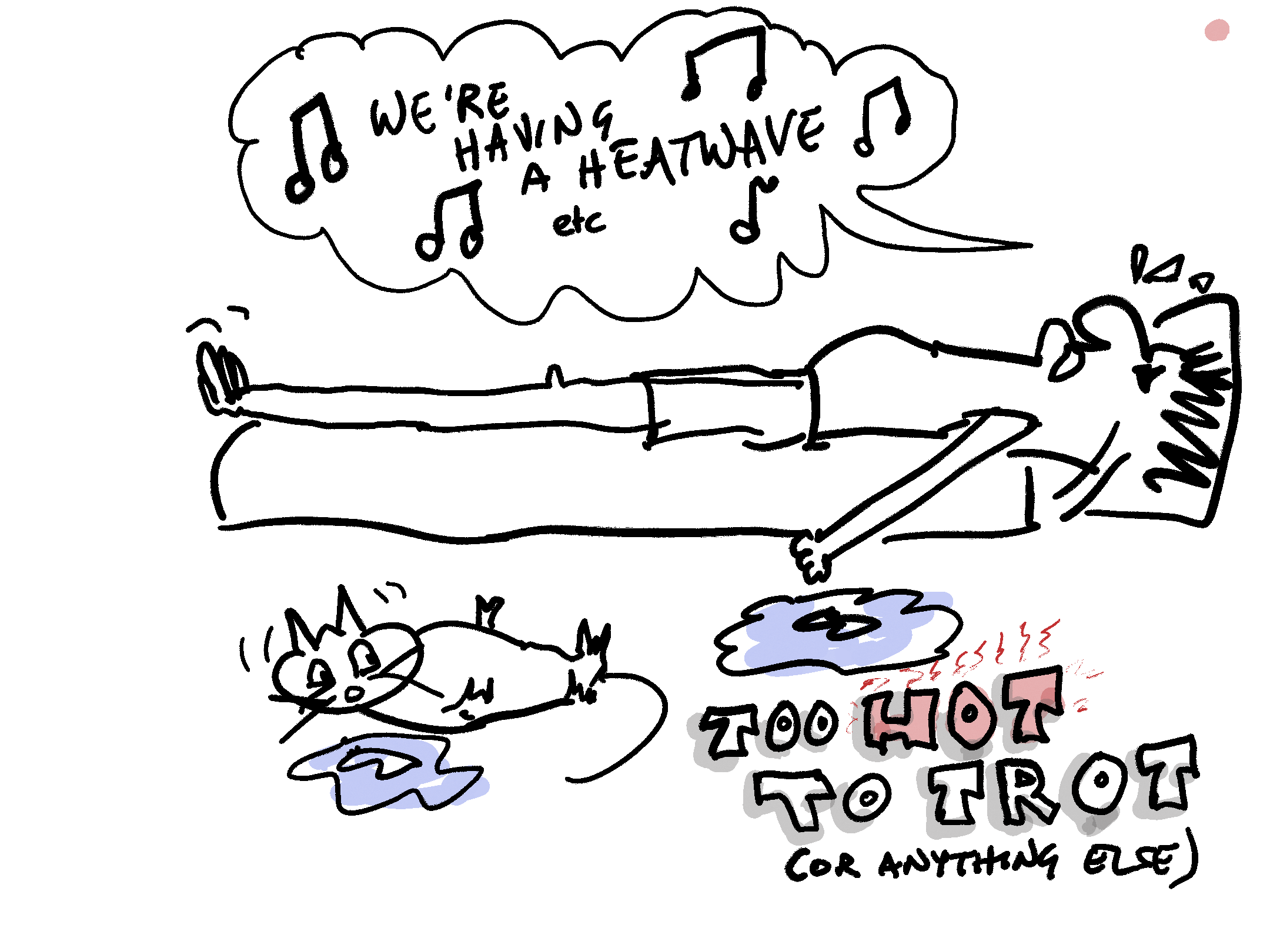
Here in Britain it is still far too hot, as illustrated below, so if there are any bad spelling or grammatical errors, that’s my excuse.
Oh, and in that regard, if anyone from the Substack team is reading this, it would be great to have a spellchecker here!
“Hard hats not just graduation caps”
Britain’s new Prime Minister, Andy Burnham, has announced that schools are to offer technical education from the age of 14. One of the problems of being as old as I am is that I remember the last time this sort of thing was done. And the time before that. And….
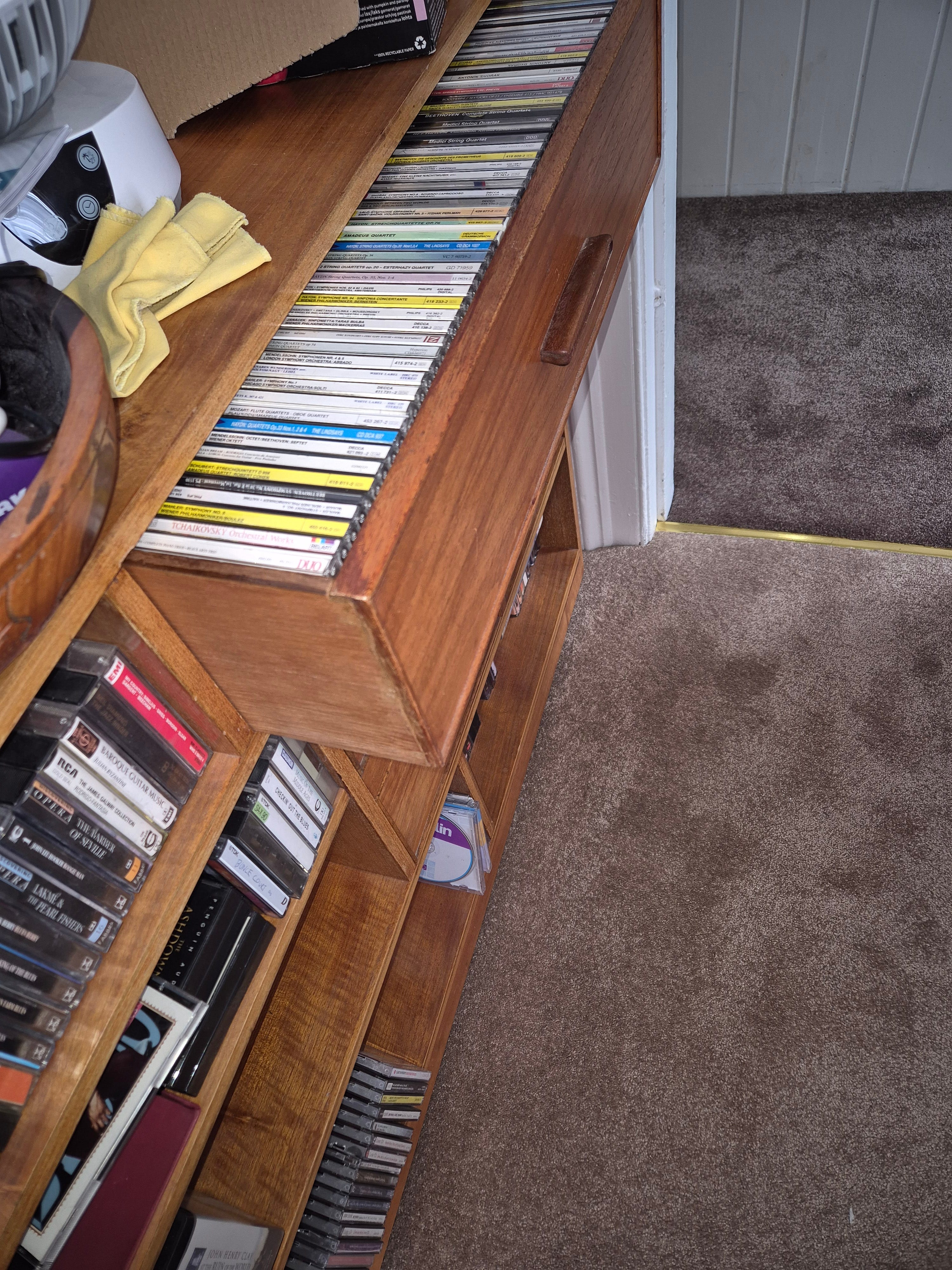
Don’t get me wrong, I’m all in favour of it. Not everyone is academically inclined, and neither is everyone technically inclined. I was marvelling today at a CD cabinet (see photo) that my father-in-law made. It’s perfect, and it was made without any written specifications.
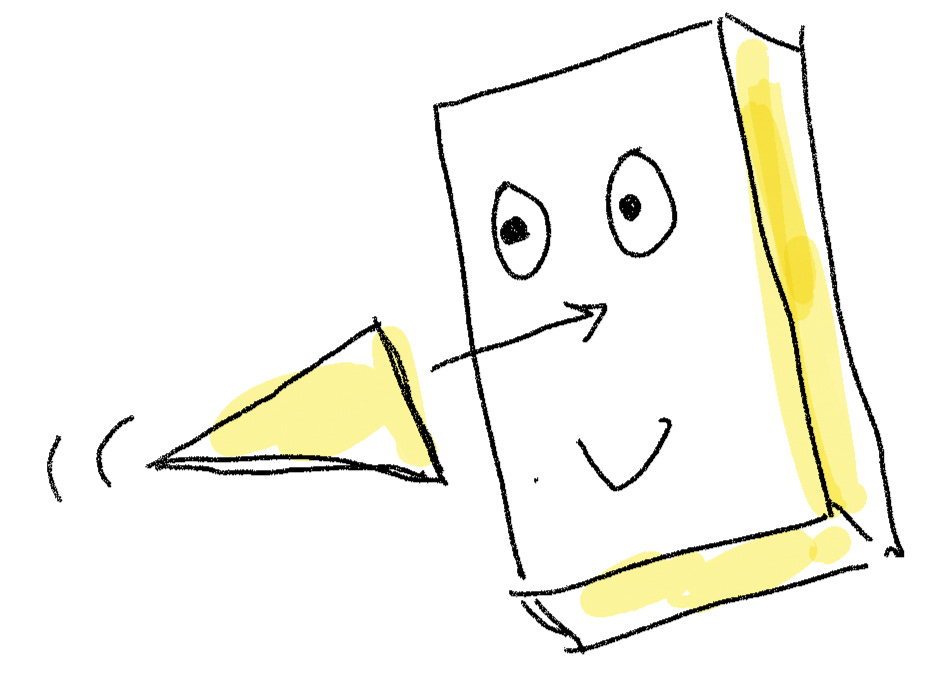
Compare that with me. At the age of 15 I was banned from the woodwork room in school by the head of department, Mr Cleaver (how’s THAT for an example of nominative determinism?). Why? Because while one of the achievements of another (admittedly older) lad had been to make a guitar, my crowning achievement was to cut a piece of wood, shape into a wedge, and glue it to a block of wood on which I had drawn two eyes and a month.
No, my frustration is that we seem to go on and on reinventing the same wheel, abandoning it, and then inventing it again, ad nauseam. During my teaching career I’ve seen these initiatives come and go several times. This version sounds very like the Diploma, a mixture of theory and practical study that involved visits to organisations and working in or with local businesses. That was a great scheme. Of course, there are a few minor details to be sorted out, such as who is going to teach it, and when? Will music and languages go by the board, for example? Will the school day be doubled in length? Anyway, I shall reserve my cynicism for now, and wish this new scheme good luck.
The stuff of fiction
We all know that Al hallucinates, by which is meant that it just makes up stuff if it doesn’t know the answer. Actually, not ALL Al. I recently asked three AI programs to review my latest book, which is called The Reconstructed Muse: AI and the Renaissance of Literature. ChatGPT wrote a cracking review, as did Perplexity Only Claude.Al popped by bubble of pride by saying , “Hang on a minute. You’re having me on, aren’t you?” Well, it didn’t put it quite like that. It said, inadvertently presenting a masterclass in diplomacy, “I don’t have The Reconstructed Muse in front of me”, which was hardly surprising, given that it doesn’t actually exist.
AI hallucinating is why I always ask a couple of Als the same question. My reasoning is that if they both say the same thing, there’s a good chance they’re correct. I do realise, though, that this is one helluva assumption, because they might both be scraping the same not-necessarily-correct sources. As always, it’s a case of caveat emptor.
Anyway, someone has created a database of Al’s hallucinations (Halupedia). It’s great fun. My favourite wonderfully bankers-sounding idea is The Ministry of Slightly Wrong Maps. Mind you, I saw a fascinating exhibition at the British Library not so long ago called Secret Maps. From the blurb:
Through over 100 items the exhibition examines how maps have played a role in preserving secrets for the benefit of their creators from the 14th century to the present day, from the hand-drawn opulent naval charts gifted to Henry VIII, to maps of cable networks used to intercept messages between the world wars; and the satellite tracking technology used by apps in our everyday lives
Secret Maps illuminates how mapping has been harnessed as a powerful political tool in global conflict while also revealing how maps can foster a sense of community and serve as a form of protest.
Halupedia reminds me of the Internet Oracle, back in Usenet days (I told you I was old). You could send in a question, it was anonymised, and a volunteer would answer it. The one that stands out for me was when someone asked: given that if you drop a slice of buttered toast on the floor it always lands butter side down, and when a cat falls from a great height it always lands on its feet, what would happen if you put butter on a cat’s feet, and the answer was along the lines of “You have discovered the secret of antigravity”.
Getting back to AI, the Society of Authors reports:
The biggest change [in Andy Burnham’s administration] is the break-up of the Department for Science, Innovation and Technology (DSIT), with digital moving to the Department of Culture, Media and Sport (DCMS) and AI elevated to the Cabinet Office. Lisa Nandy remains Secretary of State for Digital, Culture, Media and Sport, supported by Ian Murray as Minister of State. Whilst Minister for Artificial Intelligence Kanishka Narayan's new Cabinet-level role signals the importance of AI, we have yet to hear how this impacts current policy challenges. We are keeping a watching brief.
They go on:
Petition to require AI firms to disclose training data
Generative AI poses an existential threat to creators. We are calling on the Government to put fairness and transparency for creators at the heart of their AI agenda.Thanks to your support, we’ve already gathered thousands of signatures on this.
Help us keep the momentum going by signing the petition today and showing the government that creators deserve to be heard.
I think that’s a good thing. I discovered that apparently I am in the top 3% for ed tech in GPT 5.5, and I’m not sure how I feel about that. Part of me is flattered, and part of me thinks I ought to get royalties or at least a bit of credit. You can find out for yourself here: Are you in the weights? Thanks to Tony Parkin who mentioned this in either Facebook or Linkedin. Tony has a Substack, by the way:

and I think he must remember a lot because not only is he older than me, he has a better memory! I remember once I was giving a talk at a special edtech version of ResearchEd, and there was a particular episode in the history of edtech that I recalled, but could find no mention of it online. The organisation concerned had erased it from public knowledge. Fortunately, Tony mentioned it, thereby reassuring me that I hadn’t imagined it.
If you want a good laugh, read this article of his about one of his first parents’ evenings:

Handy hint
I am pretty sure I’ve mentiond this before, but blowed if I can find it. If you’re a teacher and you give the kids homework, do so at the start of the lesson, rather than the end. It will give you more time to explain what you mean. Like the time I wrote the homework on the interactive whiteboard:
Pupil: Do you want us to write this down, Sir?
Me: No. You can take the board home if you like, but I must have it back first thing in the morning!
Pupil: Yes, yes, alright!
All: 🤣
Books just in
So just in, in fact, that I haven’t had time to do much more than glance at them:


‘Innovation’ is a fascinating sweep of innovations over thousands of years and across a wide range of areas, and looks at how innovation comes about.
‘God AI’ deals with the issue of whether artificial intelligence will usher in a golden age, or whether we are sowing the seeds of our own destruction. By the same author as The Shortest History of AI.
Well, I had wanted to write more, but this is already becoming too long so I will stop there, except to say that I have disabled payments for this newsletter. It means that our feline layabouts will have to procure their own food but, as a less-than-helpful delivery man once said to me when he turned up with the wrong item, “ain’t my problem, mate”.
Comments are welcome as always. And do share and/or subscribe.
Thanks!